
Posts
Doctor's Day
July 2, 2026
PCOS now PMOS
June 2, 2026
Kidney Day Nutrition Awareness
March 11, 2026
Post-Holi Health Reset: Simple Diet & Lifestyle Tips:-
March 6, 2026
#Mineral #Rich #Immunity #Diet:-
March 5, 2026
After Holi Detox Diet
March 5, 2026
The Dawn of a New Era: How AI is Revolutionizing Drug Discovery
February 16, 2026
FDA Approves First-of-Its-Kind Device to Treat Pancreatic Cancer
February 16, 2026
The Hidden Gut Bacteria That Could Revolutionize Your Health
February 15, 2026
The Future of Diagnosis: How AI is Revolutionizing Brain Scans
February 14, 2026
Scientists Discover Protein That Can Rejuvenate Aging Brain Cells
February 13, 2026
A New Dawn for Pancreatic Cancer Treatment: FDA Approves First-of-Its-Kind Wearable Device
February 13, 2026
AI Revolutionizes Brain Scan Analysis, Offering Diagnoses in Seconds
February 12, 2026
Managing Flu Season: A Guide for 2026
February 12, 2026
Your Immune System's Molecular Diary: How Life Experiences Shape Your Health
February 11, 2026
The Origami of Life: How DNA Folding and Immune System Secrets are Revolutionizing Medicine
February 10, 2026
Revolutionary AI Technology Reads Brain MRIs in Seconds: A Game-Changer for Neurological Diagnosis
February 10, 2026
Your Guide to Ayushman Bharat at Saksham Hospital, Saharanpur
November 17, 2025
A Beautiful Gesture of Gratitude: Akanksha’s Journey to Motherhood at Saksham Hospital
November 17, 2025
Understanding Nasal Allergy & Turbinate Hypertrophy: Causes, Symptoms & Treatment
November 16, 2025
The Importance of Regular Health Check-ups
October 2, 2025
❤️ Your Heart Matters: A Guide to Better Heart Health
September 30, 2025
A day in the life of an Obstetrician
September 28, 2025
Scientists Discover Protein That Can Rejuvenate Aging Brain Cells
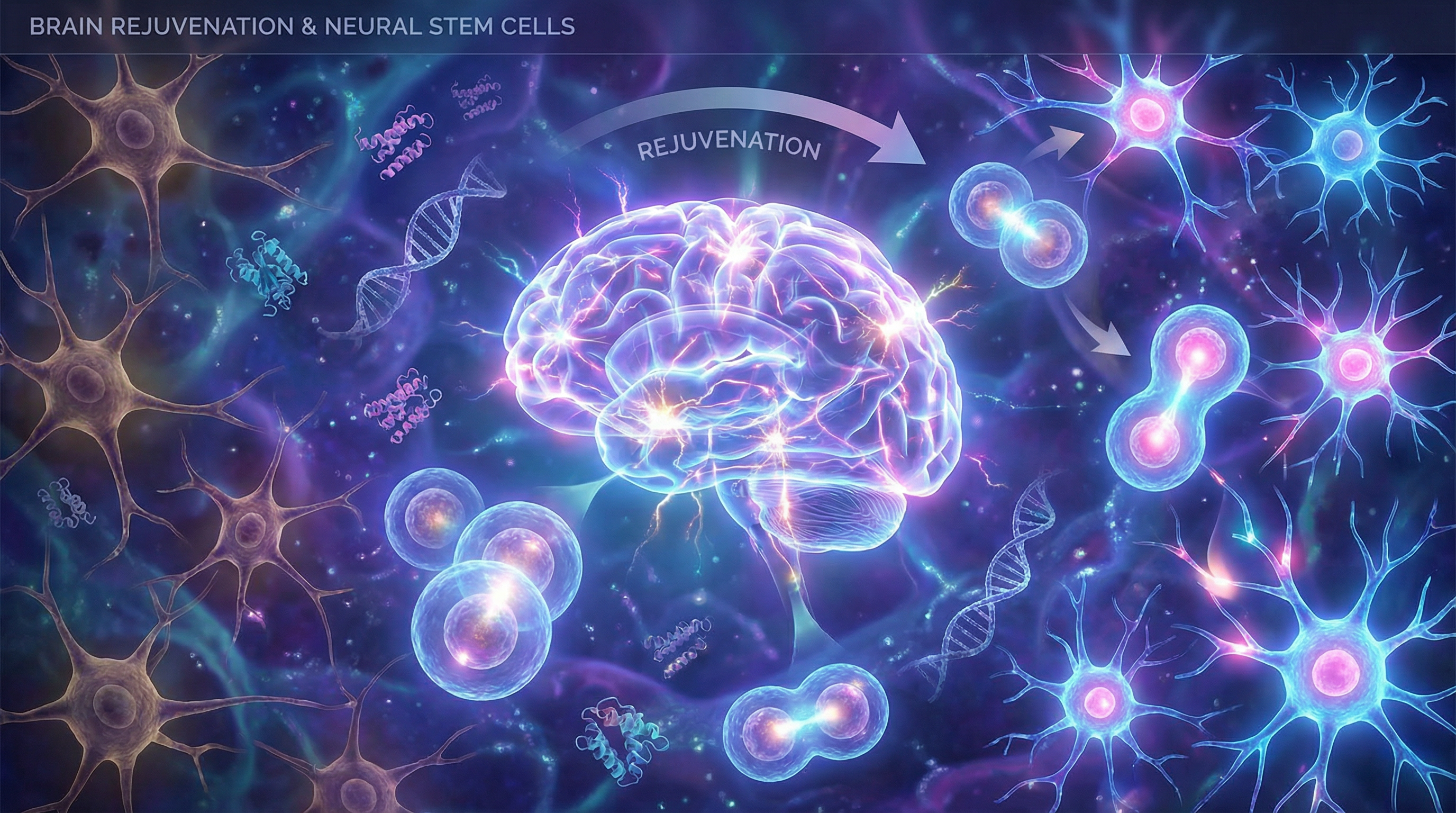
In a groundbreaking discovery that could redefine our understanding of aging, scientists at the National University of Singapore have identified a protein with the remarkable ability to rejuvenate aging brain cells. This breakthrough, centered on a protein known as DMTF1, offers new hope for therapies that could slow, and perhaps even reverse, the cognitive decline associated with aging. The findings, published in the prestigious journal *Science Advances*, shed light on the intricate mechanisms that govern brain health and open up exciting possibilities for enhancing human longevity.
The Fountain of Youth Within Our Cells
The human brain, a complex and intricate organ, possesses a remarkable capacity for adaptation and renewal, largely thanks to a specialized population of cells called neural stem cells. These cells are the master progenitors of the brain, responsible for generating new neurons throughout our lives—a process that is fundamental to learning, memory, and cognitive flexibility. However, as we age, the regenerative potential of these neural stem cells diminishes, leading to a gradual decline in cognitive function. This age-related decline has long been a central challenge in neuroscience and medicine, with researchers around the world searching for ways to preserve and restore the brain's youthful vitality.
DMTF1: The Master Regulator of Brain Rejuvenation
The Singapore-based research team, led by Assistant Professor Ong Sek Tong Derrick, has identified a key player in this cellular drama: a transcription factor named DMTF1 (cyclin D-binding myb-like transcription factor 1). Transcription factors are proteins that act as molecular switches, controlling which genes are turned on or off in a cell. The team's research has revealed that DMTF1 is a master regulator of neural stem cell activity. In young, healthy brains, DMTF1 is abundant, ensuring that neural stem cells can divide and differentiate into new neurons as needed. However, in aging brains, the levels of DMTF1 are significantly reduced. This decline in DMTF1 appears to be a critical factor in the age-related loss of neural stem cell function.
Unlocking the Secrets of Cellular Regeneration
The researchers delved deep into the molecular mechanisms by which DMTF1 exerts its effects. They discovered that DMTF1 works by activating a set of "helper" genes, including Arid2 and Ss18. These genes play a crucial role in remodeling the chromatin—the tightly packed structure of DNA and proteins within our cells. By loosening the chromatin, these helper genes make it possible for other genes, those involved in cell growth and proliferation, to become active. Without sufficient DMTF1, this entire process is impaired, and neural stem cells lose their ability to self-renew. The study also highlighted the connection between DMTF1 and telomeres, the protective caps at the ends of our chromosomes that shorten with each cell division—a well-established hallmark of aging. The research suggests that DMTF1 plays a vital role in counteracting the negative effects of telomere dysfunction in neural stem cells.
Restoring Youthful Function to Aging Brains
The most exciting aspect of this research is the potential for therapeutic intervention. The scientists found that by artificially boosting the levels of DMTF1 in aged neural stem cells, they could restore their regenerative capacity. The cells, which had previously been in a state of decline, began to divide and proliferate once more, regaining their youthful function. This remarkable finding suggests that it may be possible to develop drugs that target DMTF1, effectively turning back the clock on brain aging. Such a therapy could have profound implications for the treatment of age-related cognitive decline and neurodegenerative diseases.
The Road Ahead: From Lab to Clinic
While the initial findings are incredibly promising, the researchers are quick to point out that this is just the beginning of a long journey. The current study was conducted primarily using in vitro experiments, meaning that the results were observed in cells grown in a laboratory setting. The next crucial step will be to determine whether boosting DMTF1 can produce similar effects in living organisms. The research team plans to investigate whether increasing DMTF1 levels in animal models can enhance learning and memory, and whether this can be achieved without increasing the risk of brain tumors. The ultimate goal is to identify small molecules that can safely and effectively stimulate DMTF1 activity in the human brain, paving the way for a new generation of therapies to promote healthy aging.
A New Era for Neuroscience and Healthy Aging
This discovery marks a significant milestone in our quest to understand and combat the effects of aging on the brain. The identification of DMTF1 as a key regulator of neural stem cell function provides a powerful new target for therapeutic development. While there is still much work to be done, this research offers a tantalizing glimpse into a future where we may be able to not only slow down the aging process but also to restore the brain's remarkable capacity for self-renewal. The prospect of a future where we can maintain our cognitive vitality well into old age is no longer the stuff of science fiction; it is a tangible goal that is now within our reach.