
Posts
Doctor's Day
July 2, 2026
PCOS now PMOS
June 2, 2026
Kidney Day Nutrition Awareness
March 11, 2026
Post-Holi Health Reset: Simple Diet & Lifestyle Tips:-
March 6, 2026
#Mineral #Rich #Immunity #Diet:-
March 5, 2026
After Holi Detox Diet
March 5, 2026
The Dawn of a New Era: How AI is Revolutionizing Drug Discovery
February 16, 2026
FDA Approves First-of-Its-Kind Device to Treat Pancreatic Cancer
February 16, 2026
The Hidden Gut Bacteria That Could Revolutionize Your Health
February 15, 2026
The Future of Diagnosis: How AI is Revolutionizing Brain Scans
February 14, 2026
Scientists Discover Protein That Can Rejuvenate Aging Brain Cells
February 13, 2026
A New Dawn for Pancreatic Cancer Treatment: FDA Approves First-of-Its-Kind Wearable Device
February 13, 2026
AI Revolutionizes Brain Scan Analysis, Offering Diagnoses in Seconds
February 12, 2026
Managing Flu Season: A Guide for 2026
February 12, 2026
Your Immune System's Molecular Diary: How Life Experiences Shape Your Health
February 11, 2026
The Origami of Life: How DNA Folding and Immune System Secrets are Revolutionizing Medicine
February 10, 2026
Revolutionary AI Technology Reads Brain MRIs in Seconds: A Game-Changer for Neurological Diagnosis
February 10, 2026
Your Guide to Ayushman Bharat at Saksham Hospital, Saharanpur
November 17, 2025
A Beautiful Gesture of Gratitude: Akanksha’s Journey to Motherhood at Saksham Hospital
November 17, 2025
Understanding Nasal Allergy & Turbinate Hypertrophy: Causes, Symptoms & Treatment
November 16, 2025
The Importance of Regular Health Check-ups
October 2, 2025
❤️ Your Heart Matters: A Guide to Better Heart Health
September 30, 2025
A day in the life of an Obstetrician
September 28, 2025
Your Immune System's Molecular Diary: How Life Experiences Shape Your Health
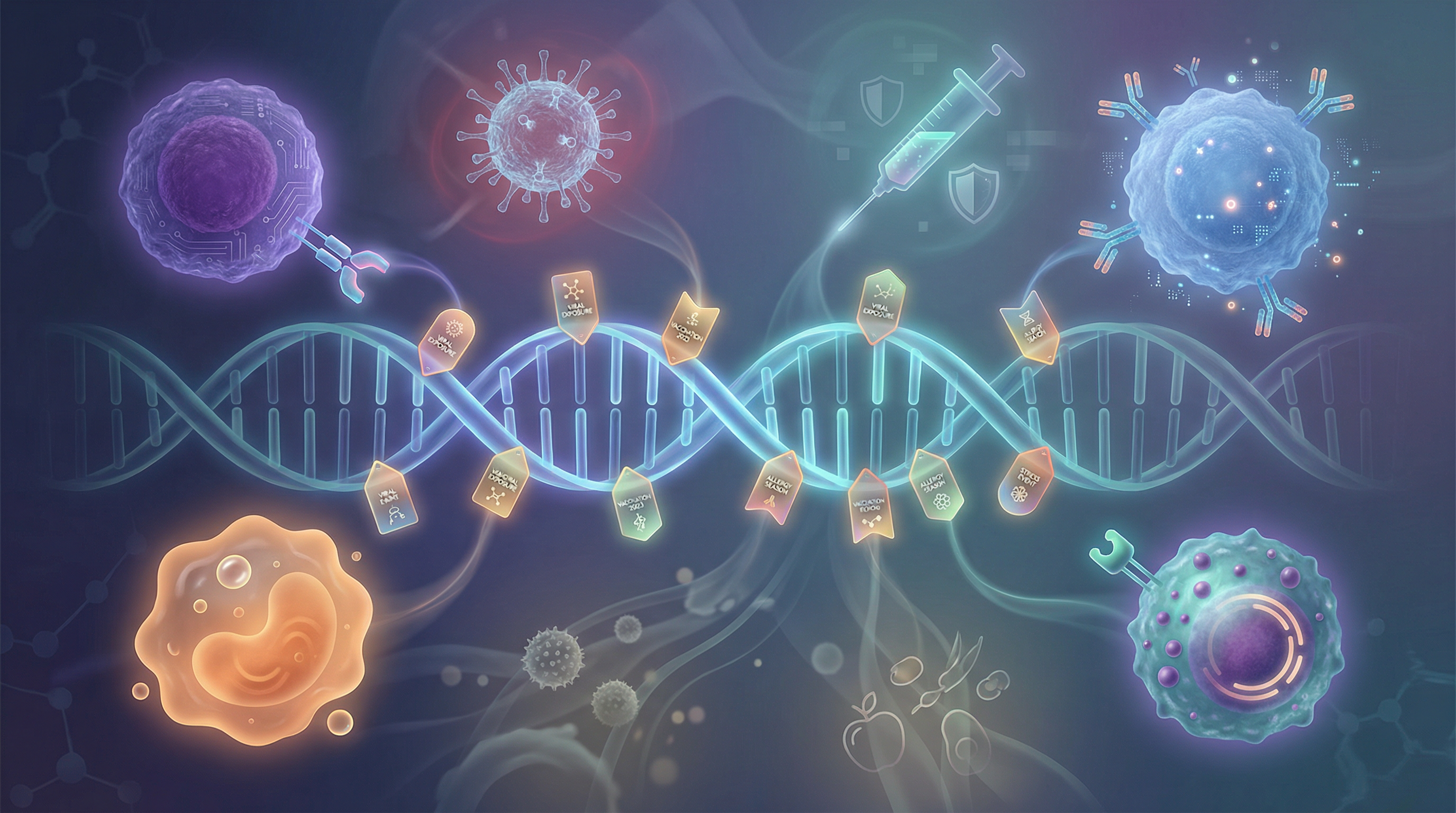
Have you ever wondered why some people seem to catch every cold that goes around, while others remain stubbornly healthy? Or why a vaccine provides robust protection for one person, but less so for another? The answer, it turns out, may be written in a molecular diary kept by your own immune system. In a groundbreaking study published on February 11, 2026, scientists at the Salk Institute have deciphered how our life experiences—from the infections we've fought off to the vaccines we've received—leave a lasting imprint on our immune cells, shaping their future responses in a highly personalized way.
The Secret Language of Our Cells: A Primer on Epigenetics
To understand this discovery, we first need to delve into the fascinating world of epigenetics. Every cell in our body, from a nerve cell to a skin cell, contains the exact same DNA. Think of DNA as a comprehensive instruction manual. If every cell has the same manual, how do they end up with such different structures and functions? The answer lies in epigenetic markers. These are tiny molecular tags that attach to our DNA and act like sticky notes, highlighting which pages of the instruction manual should be read and which should be ignored. These markers don't change the DNA sequence itself, but they control which genes are switched on or off, a process known as gene expression. This is why a muscle cell behaves differently from a brain cell, even though they share the same genetic blueprint. The collection of all these epigenetic markers in a cell is known as its epigenome.
Unlocking the Immune System's Diary: The Salk Institute Study
Led by Dr. Joseph Ecker, a professor at the Salk Institute and a Howard Hughes Medical Institute investigator, the research team set out to create a detailed epigenetic map of the human immune system. They wanted to understand how both our inherited genetic predispositions and our unique life experiences contribute to the diversity of our immune responses. To do this, they analyzed blood samples from 110 individuals with diverse genetic backgrounds and a wide range of life exposures. These included everything from common infections like the flu and SARS-CoV-2 to vaccinations for anthrax and exposure to environmental chemicals like organophosphate pesticides.
The scientists focused on four key types of immune cells:
By comparing the epigenetic patterns across these different cell types and individuals, the researchers were able to build a comprehensive catalog of epigenetic markers, which they called differentially methylated regions (DMRs).
Genetics vs. Experience: Two Sides of the Same Coin
A key breakthrough of the study was the ability to distinguish between two different types of epigenetic changes:
As Dr. Ecker explains, "Our immune cells carry a molecular record of both our genes and our life experiences, and those two forces shape the immune system in very different ways. This work shows that infections and environmental exposures leave lasting epigenetic fingerprints that influence how immune cells behave."
The Dawn of Personalized Medicine: What This Means for You
The implications of this research are profound and far-reaching, heralding a new era of personalized medicine. By understanding the unique epigenetic signature of an individual's immune system, we can move beyond a one-size-fits-all approach to healthcare.
Predicting and Preventing Disease
Imagine a future where, with a simple blood test, a doctor could predict how your body will respond to a specific virus, like a new strain of influenza, even before you've been exposed. By analyzing your immune cells' epigenetic diary, they could identify potential vulnerabilities and develop a personalized prevention strategy. This could involve a tailored vaccination schedule, specific nutritional advice, or other interventions designed to bolster your unique immune defenses. As Dr. Manoj Hariharan, a co-first author of the study, states, "Our human population immune cell atlas will also be an excellent resource for future mechanistic research on both infectious and genetic diseases, including diagnoses and prognosis. Often, when people become sick, we are not immediately sure of the cause or potential severity -- the epigenetic signatures we developed offer a road map to classify and assess these situations."
Optimizing Treatments
This research also has the potential to revolutionize how we treat diseases. For example, in the case of autoimmune disorders, where the immune system mistakenly attacks the body's own tissues, understanding the epigenetic drivers of this malfunction could lead to the development of highly targeted therapies that correct the epigenetic errors without suppressing the entire immune system. Similarly, in cancer treatment, knowing a patient's epigenetic profile could help doctors choose the most effective immunotherapy, a type of treatment that harnesses the power of the patient's own immune system to fight cancer.
The Road Ahead: A New Chapter in Immunology
This landmark study from the Salk Institute has opened a new chapter in our understanding of the immune system. By revealing the intricate interplay between our genes and our life experiences, it has provided us with a powerful new tool for predicting, preventing, and treating a wide range of diseases. The molecular diary of our immune system is no longer a secret. As we learn to read its pages more fluently, we will unlock the potential for a truly personalized and proactive approach to health and wellness, empowering each of us to live longer, healthier lives.