
Posts
Doctor's Day
July 2, 2026
PCOS now PMOS
June 2, 2026
Kidney Day Nutrition Awareness
March 11, 2026
Post-Holi Health Reset: Simple Diet & Lifestyle Tips:-
March 6, 2026
#Mineral #Rich #Immunity #Diet:-
March 5, 2026
After Holi Detox Diet
March 5, 2026
The Dawn of a New Era: How AI is Revolutionizing Drug Discovery
February 16, 2026
FDA Approves First-of-Its-Kind Device to Treat Pancreatic Cancer
February 16, 2026
The Hidden Gut Bacteria That Could Revolutionize Your Health
February 15, 2026
The Future of Diagnosis: How AI is Revolutionizing Brain Scans
February 14, 2026
Scientists Discover Protein That Can Rejuvenate Aging Brain Cells
February 13, 2026
A New Dawn for Pancreatic Cancer Treatment: FDA Approves First-of-Its-Kind Wearable Device
February 13, 2026
AI Revolutionizes Brain Scan Analysis, Offering Diagnoses in Seconds
February 12, 2026
Managing Flu Season: A Guide for 2026
February 12, 2026
Your Immune System's Molecular Diary: How Life Experiences Shape Your Health
February 11, 2026
The Origami of Life: How DNA Folding and Immune System Secrets are Revolutionizing Medicine
February 10, 2026
Revolutionary AI Technology Reads Brain MRIs in Seconds: A Game-Changer for Neurological Diagnosis
February 10, 2026
Your Guide to Ayushman Bharat at Saksham Hospital, Saharanpur
November 17, 2025
A Beautiful Gesture of Gratitude: Akanksha’s Journey to Motherhood at Saksham Hospital
November 17, 2025
Understanding Nasal Allergy & Turbinate Hypertrophy: Causes, Symptoms & Treatment
November 16, 2025
The Importance of Regular Health Check-ups
October 2, 2025
❤️ Your Heart Matters: A Guide to Better Heart Health
September 30, 2025
A day in the life of an Obstetrician
September 28, 2025
FDA Approves First-of-Its-Kind Device to Treat Pancreatic Cancer
The Unseen Enemy: A New Dawn in the Fight Against Pancreatic Cancer
Pancreatic cancer remains one of the most formidable adversaries in modern medicine. Often diagnosed in its late stages, it is notoriously aggressive and difficult to treat, leaving patients and their families with limited options and a challenging prognosis. For decades, the standard of care has revolved around a combination of surgery, radiation, and chemotherapy, treatments that, while effective for some, often come with debilitating side effects and offer only incremental improvements in survival. The statistics paint a sobering picture: in 2025 alone, pancreatic cancer was projected to account for approximately 67,440 new diagnoses and 51,980 deaths in the United States. Despite representing just 3.3% of all new cancer cases, its disproportionately high mortality rate underscores the urgent need for therapeutic innovation. The silent, insidious nature of the disease means that by the time symptoms appear, the cancer has often spread, making it unresectable and resistant to conventional therapies. This grim reality has spurred a relentless search for new weapons in the oncological arsenal, a quest for breakthroughs that can offer not just more time, but better quality of life for those affected.
A Beacon of Hope: Introducing Optune Pax, a First-of-Its-Kind Therapy
In a landmark decision that signals a new era in cancer treatment, the U.S. Food and Drug Administration (FDA) has approved Optune Pax, a revolutionary, first-of-its-kind device for adults with locally advanced pancreatic cancer. Developed by the pioneering medical technology company Novocure, Optune Pax is not a drug, but a portable, non-invasive therapy that harnesses the power of physics to combat cancer. Announced on February 12, 2026, this approval marks a pivotal moment for the pancreatic cancer community, offering a novel treatment modality that can be seamlessly integrated into a patient's daily life. FDA Commissioner Marty Makary, M.D., M.P.H., hailed the approval, stating, "The pancreatic cancer community deserves better therapeutic options. The FDA is working tirelessly to bring potentially promising therapies to people who need them." This sentiment was echoed by Michelle Tarver, M.D., Ph.D., Director of the FDA's Center for Devices and Radiological Health, who noted that the approval "provides a novel, non-invasive approach that can be integrated into patients' daily lives, expanding access to cancer care beyond traditional clinical settings." The device's approval, granted through the FDA's most rigorous Premarket Approval (PMA) pathway and fast-tracked with a Breakthrough Device designation, represents a significant validation of a new therapeutic principle and a tangible source of hope for thousands of patients.
The Science of Disruption: How Tumor Treating Fields Work
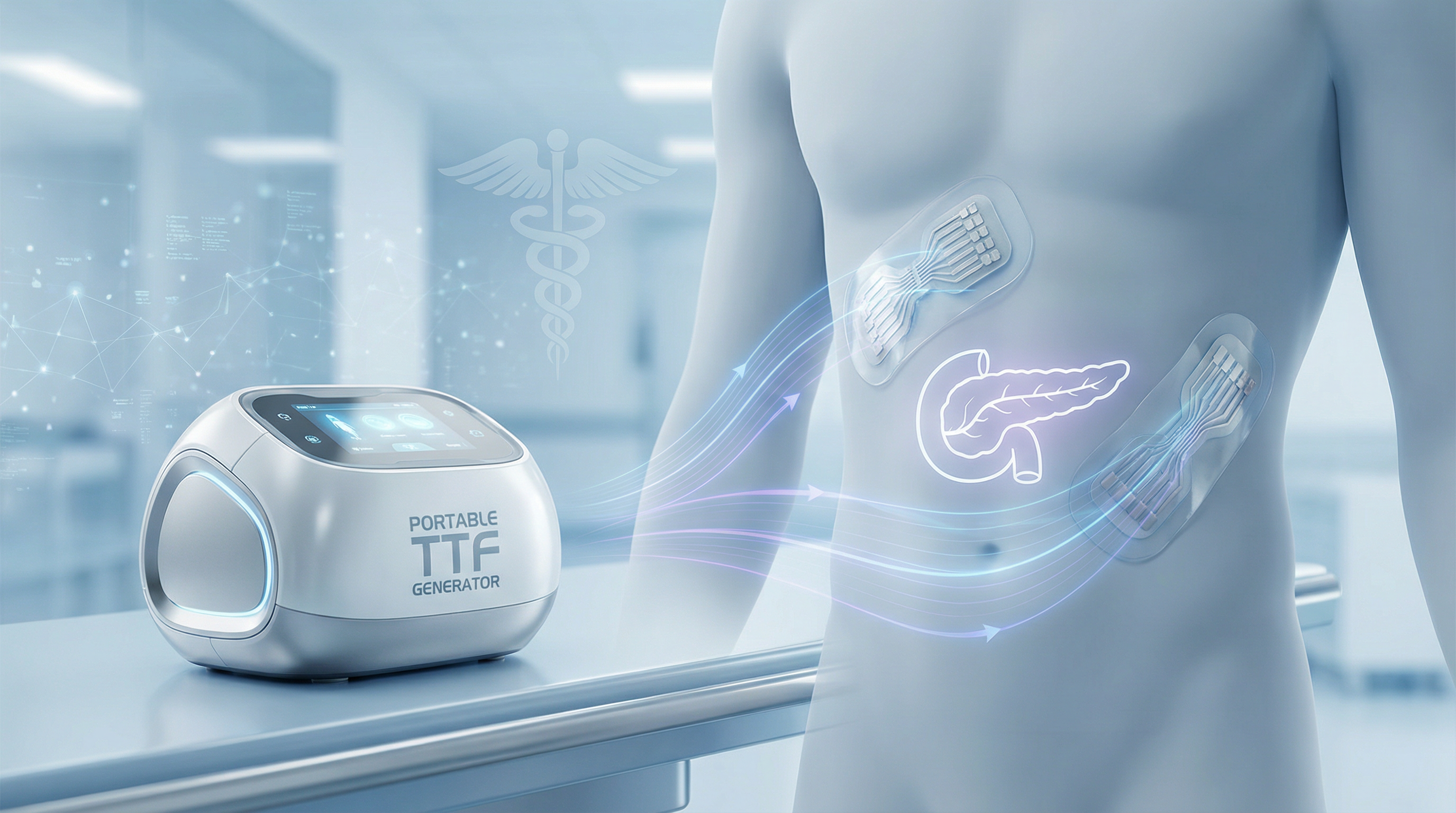
At the heart of Optune Pax is a sophisticated technology known as Tumor Treating Fields (TTFields). This innovative approach does not rely on chemical agents or radiation, but on low-intensity, alternating electrical fields. The therapy is delivered through a set of four electrically insulated adhesive patches, called transducer arrays, which are placed strategically on the patient's abdomen. These arrays are connected to a small, portable electric field generator that the patient can carry in a specially designed bag. The generator creates a localized electrical field that permeates the abdominal region, specifically targeting the rapidly dividing cancer cells. The core principle behind TTFields is elegant yet powerful: the alternating electrical fields physically disrupt the process of mitosis, the complex cellular machinery responsible for cell division. Cancer cells are characterized by their chaotic and rapid proliferation. TTFields interfere with the formation of the mitotic spindle, a critical structure composed of microtubules that orchestrates the separation of chromosomes during cell division. This disruption leads to abnormal cell division and, ultimately, to the death of the cancer cells. A key advantage of this technology is its selectivity. Because the electrical fields are tuned to a specific frequency that affects dividing cells, they have a minimal impact on healthy, non-dividing cells in the surrounding tissue, thereby reducing the collateral damage often associated with traditional cancer therapies. Patients are trained to manage the device at home, replacing the transducer arrays twice a week and managing the portable generator, allowing for continuous treatment without constant hospital visits.
Clinical Validation: The Evidence Behind the Approval
The FDA's approval of Optune Pax is not based on theory alone, but on robust clinical evidence from a pivotal randomized, controlled study. The trial, conducted under an Investigational Device Exemption, enrolled adult patients with locally advanced, unresectable pancreatic cancer and followed them for up to five years. The study was designed to evaluate the efficacy and safety of adding TTFields to the standard-of-care chemotherapy regimen of gemcitabine and nab-paclitaxel (GnP). The results were statistically significant and clinically meaningful. Patients who received the combination of Optune Pax and standard chemotherapy demonstrated an improvement in overall survival of approximately two months compared to those who received chemotherapy alone. While two months may seem modest, in the context of advanced pancreatic cancer, where every week is precious, this represents a significant step forward. Furthermore, the treatment was well-tolerated. The most common side effect reported was localized skin irritation from the adhesive patches, a manageable issue that pales in comparison to the systemic toxicities of many chemotherapy drugs. This rigorous clinical trial provided the definitive data needed to secure FDA approval, validating TTFields as a legitimate and valuable addition to the pancreatic cancer treatment landscape.
A Paradigm Shift: Empowering Patients and Redefining Cancer Care
The approval of Optune Pax is more than just the introduction of a new device; it represents a paradigm shift in how we approach cancer treatment. For patients, it offers a non-invasive therapy that can be administered at home, empowering them to take an active role in their care while maintaining their daily routines. This aligns perfectly with the FDA's "Home as a Health Care Hub Initiative," a forward-thinking strategy focused on patient-centered technologies that move care from the hospital to the home. The ability to receive continuous treatment while spending time with family, engaging in hobbies, or even working, can have a profound impact on a patient's quality of life and mental well-being. For the healthcare system, Optune Pax offers a new tool to combat one of the most challenging cancers. It expands the therapeutic arsenal beyond traditional methods and opens the door to a new class of bio-physical treatments. By enabling effective, home-based care, it has the potential to reduce the burden on hospitals and clinics, a critical consideration as healthcare systems worldwide face increasing demands. This technology is a testament to the power of innovation to not only extend life but also to enhance it, putting the patient back at the center of their own care journey.
The Road Ahead: The Future of Non-Invasive Oncology
The journey of Optune Pax from concept to clinical reality is a landmark achievement, but it is also just the beginning. The success of TTFields in pancreatic cancer opens up exciting possibilities for its application in other hard-to-treat solid tumors. Research is already underway to explore the efficacy of this technology in brain, lung, and ovarian cancers, among others. The approval serves as a powerful proof-of-concept for a new pillar of oncology, one that uses the principles of physics to fight cancer alongside the established pillars of surgery, radiation, and pharmacology. As our understanding of the bio-electrical properties of cells deepens, we can expect to see even more sophisticated and targeted electrical field therapies emerge. This breakthrough may also inspire further innovation in the broader field of non-invasive medical technology, accelerating the development of devices that are smarter, more portable, and more integrated with our daily lives. The story of Optune Pax is a powerful reminder that progress in the fight against cancer often comes from thinking differently and daring to challenge the status quo. It is a story of hope, ingenuity, and the relentless pursuit of a future where a cancer diagnosis does not mean an end to a full and active life.