
Posts
Doctor's Day
July 2, 2026
PCOS now PMOS
June 2, 2026
Kidney Day Nutrition Awareness
March 11, 2026
Post-Holi Health Reset: Simple Diet & Lifestyle Tips:-
March 6, 2026
#Mineral #Rich #Immunity #Diet:-
March 5, 2026
After Holi Detox Diet
March 5, 2026
The Dawn of a New Era: How AI is Revolutionizing Drug Discovery
February 16, 2026
FDA Approves First-of-Its-Kind Device to Treat Pancreatic Cancer
February 16, 2026
The Hidden Gut Bacteria That Could Revolutionize Your Health
February 15, 2026
The Future of Diagnosis: How AI is Revolutionizing Brain Scans
February 14, 2026
Scientists Discover Protein That Can Rejuvenate Aging Brain Cells
February 13, 2026
A New Dawn for Pancreatic Cancer Treatment: FDA Approves First-of-Its-Kind Wearable Device
February 13, 2026
AI Revolutionizes Brain Scan Analysis, Offering Diagnoses in Seconds
February 12, 2026
Managing Flu Season: A Guide for 2026
February 12, 2026
Your Immune System's Molecular Diary: How Life Experiences Shape Your Health
February 11, 2026
The Origami of Life: How DNA Folding and Immune System Secrets are Revolutionizing Medicine
February 10, 2026
Revolutionary AI Technology Reads Brain MRIs in Seconds: A Game-Changer for Neurological Diagnosis
February 10, 2026
Your Guide to Ayushman Bharat at Saksham Hospital, Saharanpur
November 17, 2025
A Beautiful Gesture of Gratitude: Akanksha’s Journey to Motherhood at Saksham Hospital
November 17, 2025
Understanding Nasal Allergy & Turbinate Hypertrophy: Causes, Symptoms & Treatment
November 16, 2025
The Importance of Regular Health Check-ups
October 2, 2025
❤️ Your Heart Matters: A Guide to Better Heart Health
September 30, 2025
A day in the life of an Obstetrician
September 28, 2025
The Origami of Life: How DNA Folding and Immune System Secrets are Revolutionizing Medicine
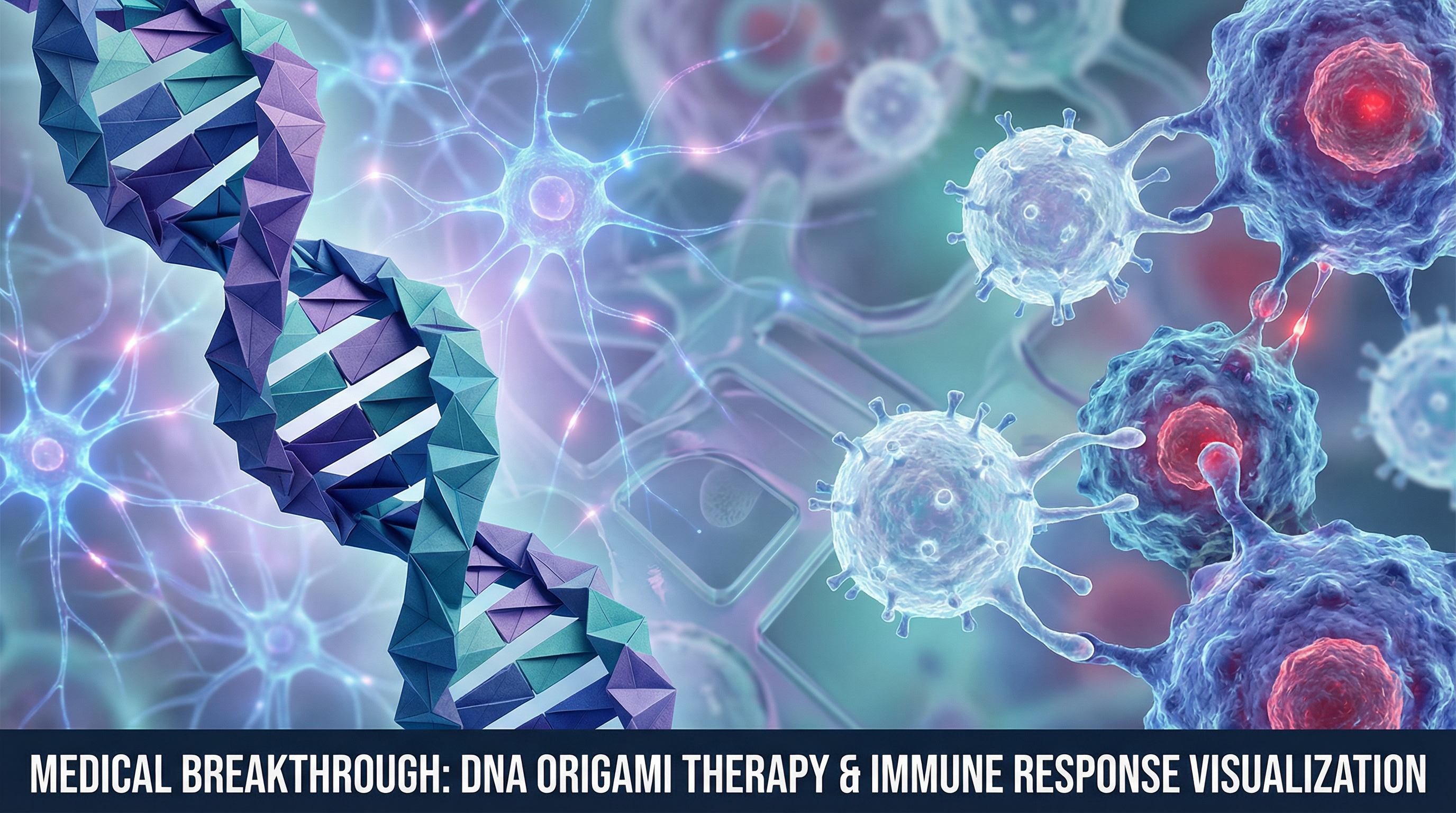
The Origami of Life: How DNA Folding and Immune System Secrets are Revolutionizing Medicine
In the intricate world of medical science, researchers are constantly pushing the boundaries of what we know. Every day, new discoveries shed light on the complex mechanisms that govern our bodies, offering hope for treating some of the most challenging diseases of our time. Recently, groundbreaking research from leading institutions has unveiled stunning insights into the very blueprint of life—our DNA—and the sophisticated strategies our immune system employs. These breakthroughs, ranging from the elegant folding of our genetic material to the secret lives of our cellular defenders, are not just academic curiosities; they are paving the way for a new era of medicine.
Scientists at the University of California, San Francisco (UCSF) have uncovered a remarkable process by which our brain cells create unique identities for themselves, a discovery with profound implications for neurological disorders like Alzheimer's and autism. At the same time, another UCSF team has exposed a cunning tactic used by cancer cells to corrupt our immune system, turning our body's protectors into unwitting allies of the disease. Adding to this wave of innovation, researchers at Vanderbilt University have pinpointed a key protein involved in insulin resistance, opening new doors for tackling type 2 diabetes and cardiovascular disease. This article will explore these three pivotal discoveries, translating the complex science into understandable insights and revealing how they are set to reshape the future of healthcare.
Unfolding the Brain's Blueprint: DNA Origami and Neurological Health
Imagine trying to wire a city with billions of houses, ensuring every single one has a unique address and is connected to the right power and communication lines, all while using the exact same set of blueprints for every house. This is the challenge our brains face during development. With billions of neurons, each needing to form precise connections, how does the brain ensure that every neuron knows its place and its role? The answer, according to a team led by Dr. Daniele Canzio at UCSF, lies in a concept that sounds more like an art form than a biological process: DNA origami.
The core of the discovery is that our DNA is not just a static, linear code. Instead, it can physically fold into intricate, three-dimensional shapes within each neuron. These unique folding patterns act as a cellular "barcode," allowing each neuron to distinguish itself from its neighbors. Think of it as each neuron having its own unique, snowflake-like DNA sculpture, a physical signature that guides its connections and defines its territory within the brain's vast network. This elegant solution to the brain's wiring problem is not only a testament to the ingenuity of biology but also a critical piece of the puzzle in understanding what goes wrong in a variety of neurological conditions.
The implications of this discovery are vast. Neurological disorders such as autism, schizophrenia, and Alzheimer's disease are often characterized by faulty or broken neural circuits. If we can understand the language of DNA folding, we may one day be able to "rewrite" the identities of neurons, essentially repairing or creating new circuits to restore lost function. This could mean rewiring connections that were improperly formed during development or have degenerated over a lifetime. The idea of harnessing this innate biological mechanism to treat brain disorders is a monumental leap forward, offering a new and powerful tool in the fight against these debilitating conditions. The research is still in its early stages, but the potential to manipulate these DNA barcodes opens up a thrilling new frontier in neuroscience and regenerative medicine.
The Trojan Horse Within: How Cancer Hijacks Our Immune System
Our immune system is our body's first line of defense, a vigilant army of cells that identify and destroy invaders like bacteria, viruses, and even our own cells when they become cancerous. Among the most important soldiers in this army are macrophages, a type of white blood cell whose job is to "eat" and clear out cellular debris and pathogens. In a healthy immune response, macrophages are ruthlessly efficient. However, in the context of cancer, something goes terribly wrong. A team at UCSF, led by Dr. Balyn Zaro, has discovered a shocking act of espionage at the cellular level: cancer cells are not just evading the immune system; they are actively corrupting it from within.
Dr. Zaro's research revealed that when macrophages attempt to consume cancer cells, they inadvertently steal proteins from the cancer cell's surface. These stolen proteins then become displayed on the macrophage's own surface, acting as a disguise. This process has a devastating two-fold effect. First, it reprograms the macrophage, transforming it from a cancer-fighting warrior into a supporter of tumor growth. These corrupted macrophages, known as tumor-associated macrophages (TAMs), begin to behave in ways that help the tumor thrive, such as promoting the growth of new blood vessels that supply the tumor with nutrients. Second, the stolen proteins act as a "don't eat me" signal, effectively blinding other immune cells to the threat and preventing them from launching an attack. Using a highly sensitive new method of mass spectrometry, Dr. Zaro's lab was able to catch this protein theft in the act, providing a stunning glimpse into the secret lives of cancer cells.
This discovery has immediate and profound implications for cancer therapy. For years, immunotherapies have focused on boosting the immune system's ability to recognize and attack cancer cells. However, the discovery of this hijacking mechanism reveals a critical vulnerability. The good news is that this knowledge also provides a new target. Dr. Zaro's team is now working to develop drugs that can selectively identify and destroy these corrupted macrophages, effectively removing the tumor's accomplices. Furthermore, they are exploring ways to create antibodies that can block the "don't eat me" signals, allowing the immune system to see the cancer for what it is and mount a proper defense. This research not only deepens our understanding of the complex relationship between cancer and the immune system but also offers a promising new strategy in the ongoing war against this devastating disease.
A New Clue in the Fight Against Insulin Resistance
While the discoveries at UCSF are reshaping our understanding of the brain and cancer, another significant breakthrough from Vanderbilt University is shedding new light on a condition that affects millions worldwide: insulin resistance. Insulin resistance is a key risk factor for type 2 diabetes and cardiovascular disease, and it is often linked to obesity. In a state of insulin resistance, the body's cells do not respond effectively to insulin, the hormone that regulates blood sugar. This leads to elevated blood sugar levels and a cascade of health problems. While current treatments can help manage the symptoms, a more targeted approach has remained elusive—until now.
A team of researchers at Vanderbilt, led by Dr. Nathan Winn, has identified a crucial protein called alpha-Parvin that plays a central role in this process. Their research, published in the journal *Molecular Metabolism*, showed that when alpha-Parvin was removed from the skeletal muscle of mice, the animals developed classic signs of insulin resistance, including reduced glucose uptake by their muscles and poor exercise tolerance. This finding pinpoints alpha-Parvin as a key player in the molecular machinery that governs how our muscles use glucose, providing a new and highly specific target for drug development.
This discovery is particularly exciting because it offers a potential alternative or complement to existing treatments. While drugs like GLP-1 receptor agonists have been successful in improving insulin sensitivity, they work through broader hormonal pathways. The identification of alpha-Parvin provides a more direct, molecular-level target within the muscle cells themselves. This could lead to the development of a new class of drugs that more precisely correct the underlying defect in insulin signaling. By focusing on this specific protein, it may be possible to restore normal glucose metabolism and improve exercise tolerance in individuals with insulin resistance, potentially preventing the progression to full-blown type 2 diabetes and reducing the risk of heart disease. This research is a testament to the power of fundamental science to uncover the root causes of disease and pave the way for more effective and targeted therapies.
The convergence of these three breakthroughs—from the origami of our DNA to the secret lives of our immune cells and the molecular switches of metabolism—paints a vivid picture of a future where medicine is more precise, more personalized, and more powerful than ever before. As we continue to unravel the intricate secrets of our own biology, we move closer to a world where today's most formidable diseases become tomorrow's treatable conditions.