
Posts
Doctor's Day
July 2, 2026
PCOS now PMOS
June 2, 2026
Kidney Day Nutrition Awareness
March 11, 2026
Post-Holi Health Reset: Simple Diet & Lifestyle Tips:-
March 6, 2026
#Mineral #Rich #Immunity #Diet:-
March 5, 2026
After Holi Detox Diet
March 5, 2026
The Dawn of a New Era: How AI is Revolutionizing Drug Discovery
February 16, 2026
FDA Approves First-of-Its-Kind Device to Treat Pancreatic Cancer
February 16, 2026
The Hidden Gut Bacteria That Could Revolutionize Your Health
February 15, 2026
The Future of Diagnosis: How AI is Revolutionizing Brain Scans
February 14, 2026
Scientists Discover Protein That Can Rejuvenate Aging Brain Cells
February 13, 2026
A New Dawn for Pancreatic Cancer Treatment: FDA Approves First-of-Its-Kind Wearable Device
February 13, 2026
AI Revolutionizes Brain Scan Analysis, Offering Diagnoses in Seconds
February 12, 2026
Managing Flu Season: A Guide for 2026
February 12, 2026
Your Immune System's Molecular Diary: How Life Experiences Shape Your Health
February 11, 2026
The Origami of Life: How DNA Folding and Immune System Secrets are Revolutionizing Medicine
February 10, 2026
Revolutionary AI Technology Reads Brain MRIs in Seconds: A Game-Changer for Neurological Diagnosis
February 10, 2026
Your Guide to Ayushman Bharat at Saksham Hospital, Saharanpur
November 17, 2025
A Beautiful Gesture of Gratitude: Akanksha’s Journey to Motherhood at Saksham Hospital
November 17, 2025
Understanding Nasal Allergy & Turbinate Hypertrophy: Causes, Symptoms & Treatment
November 16, 2025
The Importance of Regular Health Check-ups
October 2, 2025
❤️ Your Heart Matters: A Guide to Better Heart Health
September 30, 2025
A day in the life of an Obstetrician
September 28, 2025
AI Revolutionizes Brain Scan Analysis, Offering Diagnoses in Seconds
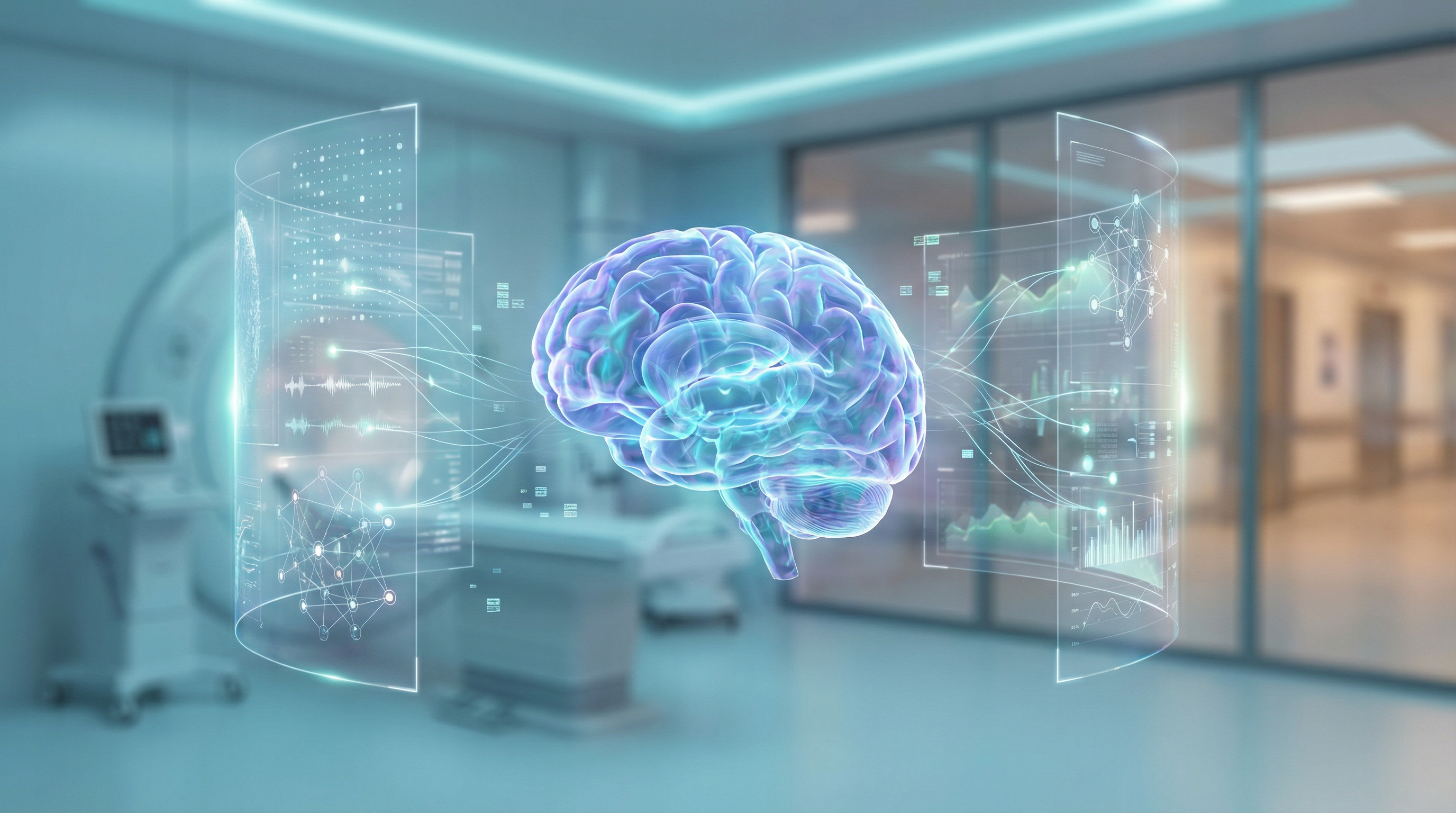
AI Revolutionizes Brain Scan Analysis, Offering Diagnoses in Seconds
For anyone who has undergone a Magnetic Resonance Imaging (MRI) scan, the waiting period for the results can be a time of intense anxiety. The complex images of our internal structures, particularly the brain, require meticulous analysis by highly trained radiologists. This process, while crucial, can take days, or even longer, leaving patients and their families in a state of uncertainty. But what if this critical diagnostic information could be available in mere seconds? A groundbreaking development from the University of Michigan is turning this possibility into a reality, heralding a new era in medical imaging and patient care.
Introducing Prima: The Future of Medical Imaging
At the heart of this revolution is an artificial intelligence model named Prima. Developed by a team of researchers led by Dr. Todd Hollon, a neurosurgeon at University of Michigan Health, Prima is a sophisticated AI that can read and interpret brain MRI scans with astonishing speed and accuracy. Described by its creators as a "ChatGPT for medical imaging," Prima is a vision language model, meaning it can simultaneously process and understand images, text, and even video in real time. This capability allows it to analyze complex medical data in a way that was previously unimaginable.
The power of Prima lies in its extensive training. Unlike previous AI models that were trained on small, manually selected datasets for specific tasks, Prima was trained on the entirety of the University of Michigan Health's digitized MRI records. This massive dataset includes over 200,000 MRI studies and 5.6 million imaging sequences, spanning decades of medical history. Furthermore, the researchers enriched this data with patients' clinical histories and the reasons their physicians ordered the imaging studies. This comprehensive approach allows Prima to function much like a human radiologist, integrating various pieces of information to form a holistic understanding of a patient's condition.
Unprecedented Speed and Accuracy
The results of Prima's performance are nothing short of remarkable. In a study published in the prestigious journal *Nature Biomedical Engineering*, the AI model demonstrated up to 97.5% accuracy in detecting a wide range of neurological conditions. It can identify over 50 different radiologic diagnoses, from brain tumors to strokes and hemorrhages. And it does all of this in a matter of seconds.
The implications of this speed are profound. For patients suffering from acute neurological events like a stroke or a brain bleed, every second counts. The faster a diagnosis is made, the sooner treatment can begin, leading to significantly better outcomes and potentially saving lives. Prima can automatically flag these urgent cases and alert the appropriate medical specialists, such as a stroke neurologist or a neurosurgeon, ensuring that critical patients receive immediate attention. As Yiwei Lyu, a co-first author of the study, notes, "Accuracy is paramount when reading a brain MRI, but quick turnaround times are critical for timely diagnosis and improved outcomes."
A "Co-pilot" for Radiologists
It is important to understand that the goal of AI like Prima is not to replace human doctors. Instead, it is designed to be a powerful "co-pilot" that assists and augments the skills of medical professionals. The sheer volume of medical imaging data is growing exponentially, placing an immense strain on radiologists and healthcare systems. Prima helps to alleviate this burden by automating the initial analysis of MRI scans, prioritizing the most critical cases, and providing a preliminary diagnosis for the radiologist to review.
This collaborative approach allows radiologists to focus their expertise on the most complex cases and to make more informed decisions, faster. Dr. Hollon emphasizes this point, stating that "Like the way AI tools can help draft an email or provide recommendations, Prima aims to be a co-pilot for interpreting medical imaging studies." This partnership between human expertise and artificial intelligence promises to create a more efficient and effective healthcare system.
Addressing Healthcare's Grand Challenges
The development of Prima comes at a critical time for healthcare. The global demand for MRI scans is on the rise, and in many places, it is outpacing the availability of trained neuroradiologists. This leads to workforce shortages, diagnostic errors, and long, stressful waits for patients. Prima offers a scalable solution to these challenges. By improving the efficiency of the diagnostic process, it can help to reduce backlogs and ensure that patients receive timely care, regardless of where they live.
Dr. Vikas Gulani, the Chair of the Department of Radiology at U-M Health, highlights the broad impact of this technology: "Whether you are receiving a scan at a larger health system that is facing increasing volume or a rural hospital with limited resources, innovative technologies are needed to improve access to radiology services." Prima has the potential to democratize access to high-quality diagnostic imaging, bringing the expertise of a major medical center to every corner of the globe.
The Dawn of a New Era in Medicine
The development of Prima is just the beginning. The research team is already working on integrating more detailed patient information and electronic medical record data to further enhance the AI's diagnostic accuracy. And while Prima is currently focused on brain MRIs, the underlying technology could one day be adapted for other imaging modalities, such as mammograms, chest X-rays, and ultrasounds. The potential to apply this powerful AI to a wide range of medical conditions is truly transformative.
We are standing at the dawn of a new era in medicine, one where artificial intelligence will play an increasingly vital role in how we diagnose and treat diseases. The development of Prima at the University of Michigan is a powerful demonstration of this potential. By combining the power of AI with the vast repository of human medical knowledge, we can create a future where healthcare is faster, more accurate, and more accessible for everyone. The anxious wait for a diagnosis may soon become a relic of the past, replaced by the quiet hum of an AI working in partnership with doctors to save lives.