
Posts
Doctor's Day
July 2, 2026
PCOS now PMOS
June 2, 2026
Kidney Day Nutrition Awareness
March 11, 2026
Post-Holi Health Reset: Simple Diet & Lifestyle Tips:-
March 6, 2026
#Mineral #Rich #Immunity #Diet:-
March 5, 2026
After Holi Detox Diet
March 5, 2026
The Dawn of a New Era: How AI is Revolutionizing Drug Discovery
February 16, 2026
FDA Approves First-of-Its-Kind Device to Treat Pancreatic Cancer
February 16, 2026
The Hidden Gut Bacteria That Could Revolutionize Your Health
February 15, 2026
The Future of Diagnosis: How AI is Revolutionizing Brain Scans
February 14, 2026
Scientists Discover Protein That Can Rejuvenate Aging Brain Cells
February 13, 2026
A New Dawn for Pancreatic Cancer Treatment: FDA Approves First-of-Its-Kind Wearable Device
February 13, 2026
AI Revolutionizes Brain Scan Analysis, Offering Diagnoses in Seconds
February 12, 2026
Managing Flu Season: A Guide for 2026
February 12, 2026
Your Immune System's Molecular Diary: How Life Experiences Shape Your Health
February 11, 2026
The Origami of Life: How DNA Folding and Immune System Secrets are Revolutionizing Medicine
February 10, 2026
Revolutionary AI Technology Reads Brain MRIs in Seconds: A Game-Changer for Neurological Diagnosis
February 10, 2026
Your Guide to Ayushman Bharat at Saksham Hospital, Saharanpur
November 17, 2025
A Beautiful Gesture of Gratitude: Akanksha’s Journey to Motherhood at Saksham Hospital
November 17, 2025
Understanding Nasal Allergy & Turbinate Hypertrophy: Causes, Symptoms & Treatment
November 16, 2025
The Importance of Regular Health Check-ups
October 2, 2025
❤️ Your Heart Matters: A Guide to Better Heart Health
September 30, 2025
A day in the life of an Obstetrician
September 28, 2025
A day in the life of an Obstetrician
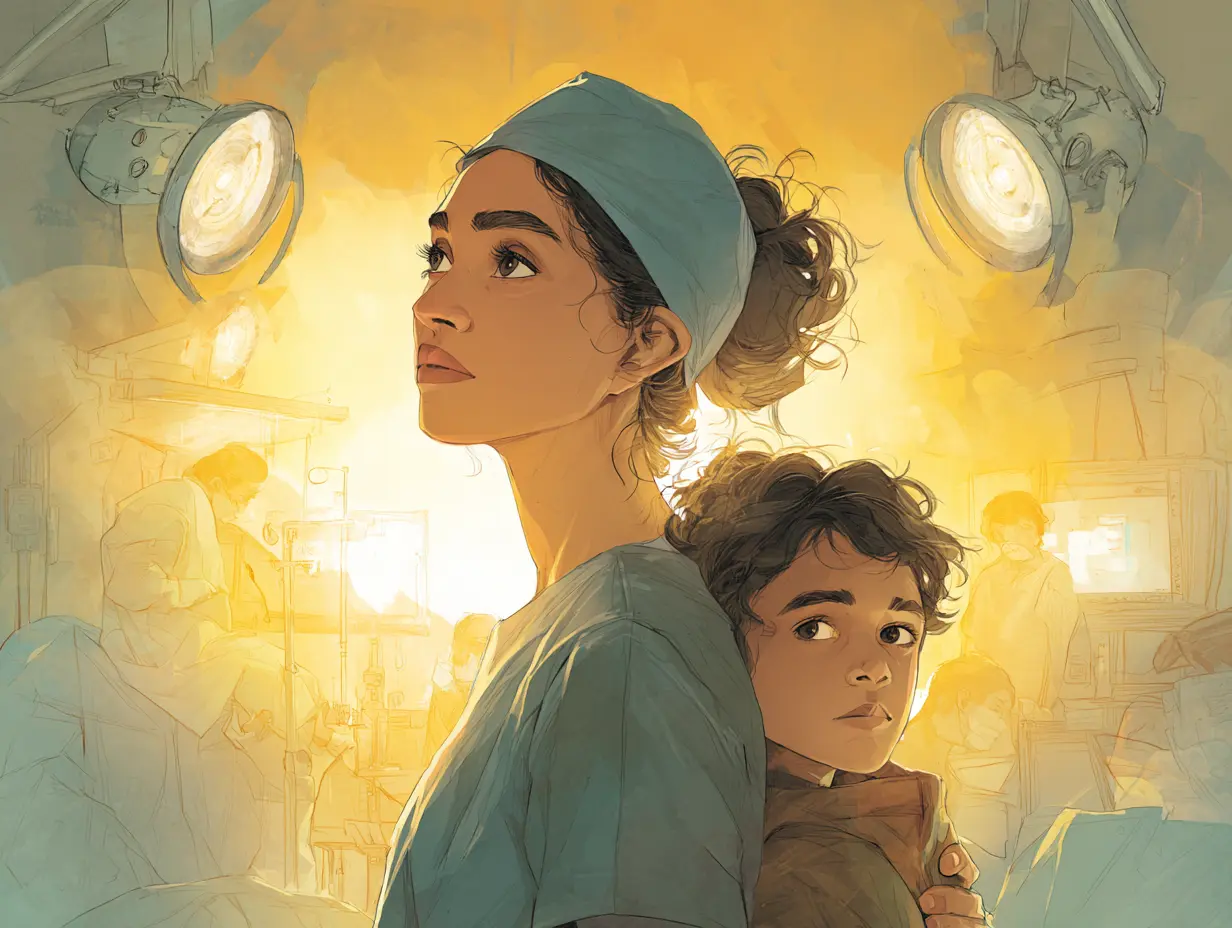
Chapter 1: Midnight Calls and Miracles
Tring... Tring... The persistent ring of my bedside phone jolts me from my slumber—an emergency at the hospital, just when I thought the day was over.
"Oh God, not another emergency..." I groan internally. In obstetrics, isn't every patient an emergency? It had been a grueling day, and it was past midnight when sleep had claimed me. Now, the glaring digits of my watch read 2:00 AM. When does the day actually begin for an obstetrician?
Hurriedly, I change from my pajamas into trousers while the nurse's voice echoes in my head—full-term pregnancy, excessive bleeding. Differential diagnoses race through my mind. Low-lying placenta? Not in her file. Excessive show? Or worse, an abruptio placenta, possibly leading us to an emergency C-section and scrambling to arrange a blood transfusion.
At the hospital, the situation escalates. The patient is bleeding heavily, but thankfully, the baby's heartbeat is steady and strong. "We have to operate now," I assert to anxious relatives. They nod, their eyes pleading for the safety of both mother and child.
With our regular anesthetist unreachable, panic flickers within me until, finally, the fourth call is answered. The surgery is a concentrated flurry of motion and precision, culminating in relief—mother and child both safe.
By the time my own head hits the pillow again, it's 4:30 AM. But rest is fleeting; my alarm is a merciless companion at 6:30 AM.
____________________________________________
Chapter 2: Morning Chill and Life's Warm Embrace
At 6:30 AM, winter in Saharanpur wraps the world in a frigid embrace. Nestled in my cozy bed, I put off the alarm, close my eyes, and turn to the other side. Ten minutes later, I pull myself out of bed. The phone is already in my hand, the duty nurse on the other end filling me in on the last night's patient—my anxiety about their well-being quietly setting the day's pace.
My son stirs in his room, and the daily ballet begins: waking him, preparing his tiffin, revising English chapters for the test he faces today. Our routine—both comforting and sacred—ends with a quick goodbye hug and kiss at the school gates.
Back home, concerns shift from professional to personal. My mother-in-law has been unwell for the last few months. She looks uncomfortable. After a quick check, I administer nebulization and medication, a brief respite in her ongoing battle.
My husband is tangled in his own morning upheaval—an emergency case involving a politician with a nosebleed and hypertension throwing his weight around. Meanwhile, I have an elective C-section scheduled for a high-risk patient with alarmingly high BP at 9:30 AM. I take a quick shower and gulp some breakfast before I'm back in my scrubs in the operation theater. I review the patient's file once more, my focus narrowing to the task at hand. Thankfully, the surgery is uneventful—both mother and baby are fine. I heave a sigh of relief and shift the patient to the post-op ICU.
It's 10:30 AM and Monday. I call Mondays "Kachumber days" as they're really hectic; OPDs open after the weekend, and by the end of the day, you feel as mixed and tossed as a Kachumber salad. I glance at the long list of appointments and settle back into my OPD chamber chair, ready to take on the day. I've seen maybe just 2-3 patients when I get a call from the post-op ICU—"Ma'am, your patient is having seizures!" Oh God, my pre-eclampsia (PET) patient is experiencing eclampsia. My heart racing, I rush as fast as I can, quickly administer anticonvulsants, and other necessary drugs. After some tension-ridden moments, the patient stabilizes, and so does my heartbeat. I wait at her bedside, counsel the panic-stricken husband and relatives, and head back to the OPD, leaving strict monitoring instructions with the staff.
In the OPD, there's more chaos as some patients have been kept waiting long because of the emergency. The OPD staff struggles to pacify them and restore order. I try to be faster in my examinations and evaluations. It's afternoon, and I decide to skip lunch, opting for chai and biscuits instead. Sipping chai, I go through the rest of the OPD and some minor procedures.
By 4:30 PM, I am exhausted. I head home. My son has been waiting for me. I hug him, and he excitedly tells me about his day. I listen to him with half an ear while having my meal and relax for a while before the evening OPD. At 6:00 PM, it's time for evening OPD. I leave for the hospital, instructing my son to finish his homework and prepare for the Maths test the next day. My mother-in-law looks better. I tell her I'm sorry for not spending any time with her today and promise to sit with her the next morning. She just kisses my forehead and nods understandingly.
I manage to wrap up my OPD in an hour. I haven't gotten a chance to talk to my husband amidst his block-to-block surgeries and large OPD. I decide to meet him in the changing room as he prepares for the next and final surgery. He is delighted to see me, and we briefly talk. I share the stressful moments of the day. He pulls me into a warm embrace and says, "You are the BEST!"—and I am filled with renewed energy and joy.
____________________________________________
Chapter 3: The Unpredictable Harmony
After concluding the evening rounds, I head home, check my son's homework and test preparations. Today holds a special place in my heart—it's the day of my best friend Amrita's younger sister Charu's wedding. Charu had her heart set on my timely presence for the baraat arrival. My affection for Charu knows no bounds, and I had every intention of being there.
Checking the clock, it reads 7:45 PM. Quick decisions are in order regarding my attire for the evening; there will be no time to visit the salon. Instead, I opt for a straightforward bun and a touch of makeup. But in an obstetrician's life, the unexpected is to be anticipated. And as if on cue, the hospital phone shatters the silence. A ring that pierces through every plan and hope—"Please, not now," I silently plead. Yet, duty calls—it's a booked patient, and she's in advanced labor. I race to the hospital, relief mixing with urgency as arriving in time for Charu's special moment still feels within reach.
A healthy infant is ushered into the world at 8:26 PM, crying robustly. I do some mental calculations—I can still make it in time if I don't spend much time on dressing up. However, nature interjects! A retained placenta demands immediate attention, and I must summon the anesthetist for a manual removal. Time stretches and compresses in these moments, and I can only forge ahead.
Finally, patient care transitions to post-operation recovery. It's 9:35 PM. Back home, my husband awaits, having just returned himself. He decides to accompany me.
We arrive precisely as the sacred Pheras commence. Charu's eyes, glistening with emotions, meet mine. My apology is wordless yet profound; she reciprocates with a teary but understanding smile. The matrimonial rituals evolve into celebratory dances, where my husband and I find solace and joy in each other's arms amidst the festivities.
Over the threshold of midnight, we go, reaching home wearied to our core but encompassed by happiness. It prompts the question: "When does a day end for an obstetrician?" Sleep is but a brief interlude in the continuing opera of life and birth.
Yet, in this exhausting high-wire act, gratitude is my steadfast anchor. I am fulfilled by my profession and rejuvenated by the enduring love of my family. This is the balance—an obstetrician's calling harmonized with the profound melody of home life.
____________________________________________